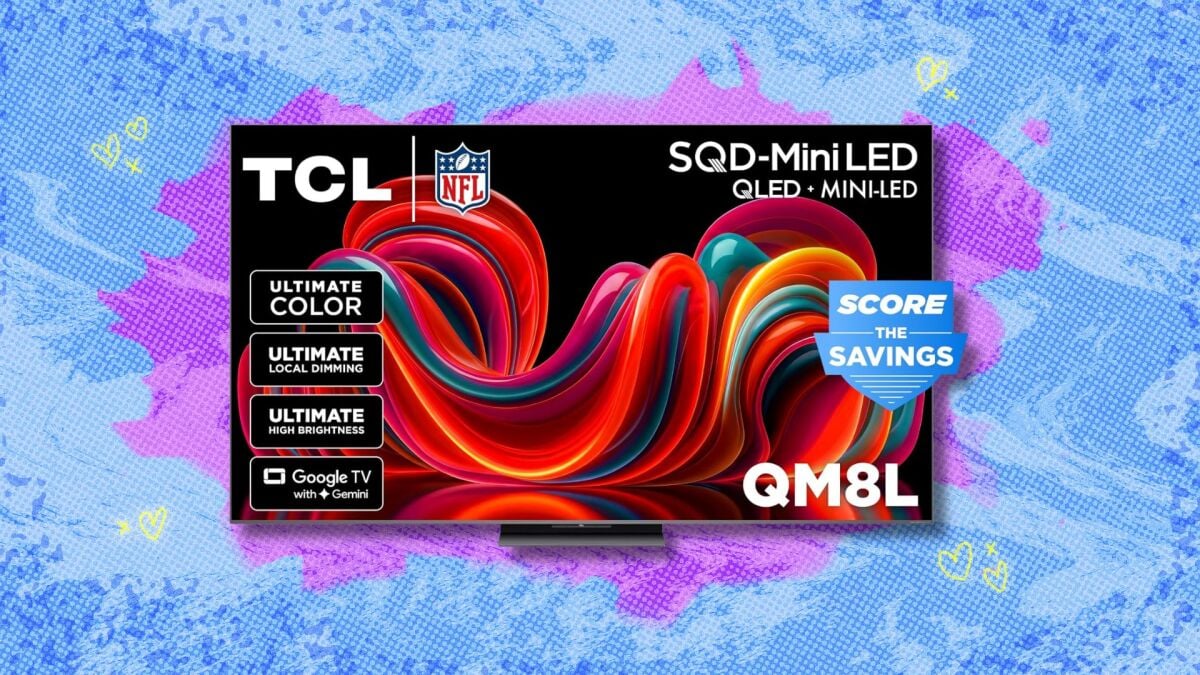
SAVE OVER $1,000: As of Aug. 18, the TCL 85-inch QM8L SQD-Mini-LED QLED TV has returned to its lowest-ever price of $2,797.99 at Amazon. Compared to its full price of $3,999.99, that’s $1,202 in savings.
$2,797.99
at Amazon
$3,999.99
Save $1,202
TCL’s massive 85-inch QM8L SQD-Mini-LED QLED TV has received a significant price cut on Amazon, bringing it down to its lowest-ever price. For a limited time, you can snag this sleek 4K QLED display for $2,797.99, down from its full price of $3,999.99.
Overall, that makes for $1,202 in savings, which is absolutely worth taking advantage of if you’ve been on the hunt for a TV upgrade. It’s worth mentioning that it has a “limited time deal” tag right now, so it may not be live for long. So don’t wait and miss out on this awesome opportunity to bag this TV while it’s back at its best price.
What’s the best time to buy a TV? Not just Black Friday. Shop strategically during these 4 windows.
This huge 2026 TCL TV boasts a 4K QLED display with TCL’s Deep Color System and TCL Halo Control System, which help bring out vibrant colors, brightness, and detail in what you watch. It also boasts a 144Hz refresh rate that makes on-screen action look smooth and fluid rather than blurry, which is very helpful for everything from live sports to video games.
Plus, you’ll get to enjoy detailed sound quality thanks to Audio by Bang & Olufsen, and it’s even a smart TV. With Google TV, you’ll be able to have all of your favorite streaming services right at your fingertips and ready to jump into.
This TCL TV deal is well worth checking out while it’s still live, so don’t miss out on it at Amazon.
Mashable Deals
Want to learn more about getting the best out of your tech? Sign up for Mashable’s Top Stories and Deals newsletters today.
PakarPBN
A Private Blog Network (PBN) is a collection of websites that are controlled by a single individual or organization and used primarily to build backlinks to a “money site” in order to influence its ranking in search engines such as Google. The core idea behind a PBN is based on the importance of backlinks in Google’s ranking algorithm. Since Google views backlinks as signals of authority and trust, some website owners attempt to artificially create these signals through a controlled network of sites.
In a typical PBN setup, the owner acquires expired or aged domains that already have existing authority, backlinks, and history. These domains are rebuilt with new content and hosted separately, often using different IP addresses, hosting providers, themes, and ownership details to make them appear unrelated. Within the content published on these sites, links are strategically placed that point to the main website the owner wants to rank higher. By doing this, the owner attempts to pass link equity (also known as “link juice”) from the PBN sites to the target website.
The purpose of a PBN is to give the impression that the target website is naturally earning links from multiple independent sources. If done effectively, this can temporarily improve keyword rankings, increase organic visibility, and drive more traffic from search results.